Sealing
Concrete Sealing Services in Corpus Christi, TX
D & C Concrete Cutting provides concrete sealing services throughout Corpus Christi to protect joints, cracks, and cut lines from water intrusion, debris, and long-term deterioration. Concrete sealing is a critical final step after slab sawing, joint widening, or crack repair, filling the gap with a durable sealant that keeps moisture and contaminants from working their way into the slab. For Corpus Christi properties dealing with coastal humidity and seasonal temperature swings, concrete sealing helps joints perform properly for years after the initial cut.
Schedule concrete sealing services with D & C Concrete Cutting
in Corpus Christi.
Why Concrete Sealing Matters
Concrete naturally expands and contracts with temperature changes, and control joints are cut into slabs specifically to manage that movement. Without concrete sealing, these joints remain open to water, dirt, and debris, all of which can work their way beneath the slab and accelerate cracking or base erosion. Concrete sealing closes that gap with a flexible material designed to move with the joint, keeping the slab protected while still allowing for natural expansion and contraction.
In Corpus Christi's humid, coastal climate, concrete sealing also helps prevent water infiltration that can lead to soil erosion beneath slabs, a common contributor to slab settling and uneven surfaces over time.
Types of Concrete Sealing Materials
Concrete sealing is performed using different sealant types depending on the joint's exposure, movement, and load requirements.
Polyurethane
Epoxy
Silicone
Polyurethane is a common concrete sealing material for joints exposed to vehicle traffic, offering flexibility and durability under repeated load cycles.
Polyurethane Sealants
Epoxy-based concrete sealing is used for joints that require rigid, high-strength bonding rather than flexibility, often in industrial flooring applications.
Epoxy Sealants
Silicone concrete sealing performs well in joints exposed to significant thermal movement, since it retains flexibility across a wide temperature range.
Silicone Sealants
Request a concrete sealing estimate for your Corpus Christi property.
Common Applications for Concrete Sealing
Concrete sealing is used across residential, commercial, and industrial properties throughout Corpus Christi wherever joints or cracks need long-term protection.
Driveway and Sidewalk Joint Sealing
Concrete sealing protects control joints in driveways and sidewalks from water intrusion and weed growth over time.
Warehouse and Industrial Floor Sealing
Concrete sealing in industrial settings protects control joints from forklift traffic, chemical exposure, and heavy equipment loads.
Parking Lot and Roadway Sealing
Concrete sealing helps parking lots and roadways resist water infiltration, which is a leading cause of pavement base failure in coastal environments like Corpus Christi.
The Concrete Sealing Process
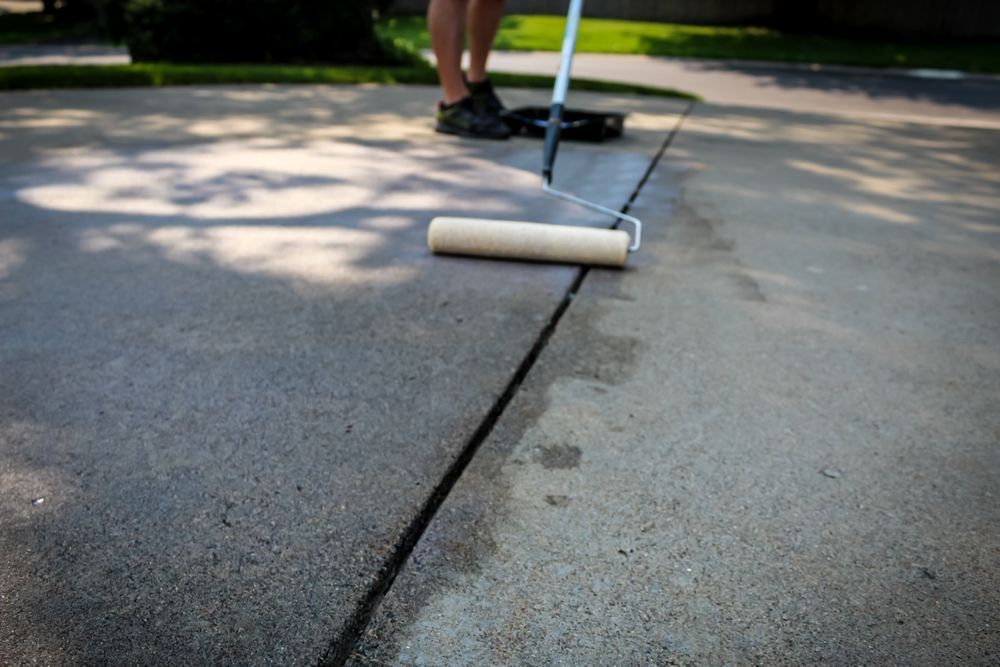
Concrete sealing begins with cleaning the joint thoroughly to remove debris, dust, and old sealant material that could prevent proper adhesion. Once the joint is clean and dry, a backer rod is often installed to control sealant depth before the concrete sealing material is applied in a continuous, even bead along the joint line.
After application, the concrete sealing material is tooled to create a smooth surface and proper adhesion to both sides of the joint. Curing time varies by sealant type, and our team accounts for weather conditions in Corpus Christi to ensure the concrete sealing cures properly before the area returns to service.
Contact
D & C Concrete Cutting
to protect your concrete joints with professional sealing.
Frequently Asked Questions About Concrete Sealing
What is concrete sealing used for?
Concrete sealing is used to protect joints and cracks from water intrusion, debris, and long-term deterioration by filling the gap with a durable, flexible material.
How long does concrete sealing last?
Concrete sealing typically lasts several years depending on the sealant type, traffic exposure, and climate conditions, with polyurethane and silicone products often lasting five years or more.
What type of sealant is best for driveways?
Polyurethane concrete sealing is commonly recommended for driveways due to its flexibility and durability under vehicle traffic.
Does concrete sealing prevent cracking?
Concrete sealing does not prevent cracking directly, but it protects existing joints and cracks from water intrusion that can accelerate further damage.
How soon after cutting can concrete sealing be applied?
Concrete sealing should be applied once the joint is clean, dry, and free of debris, which is typically shortly after slab sawing or joint widening is complete.
Can concrete sealing be applied to old, existing cracks?
Yes, concrete sealing can be applied to existing cracks after proper cleaning and, in some cases, joint widening to create the correct sealant profile.
Is concrete sealing necessary in humid climates like Corpus Christi?
Yes, concrete sealing is especially important in humid, coastal climates where moisture intrusion can accelerate base erosion and slab movement.
What happens if concrete sealing is skipped?
Without concrete sealing, joints remain open to water and debris, which can lead to erosion beneath the slab, weed growth, and accelerated cracking.
Can concrete sealing be used on both indoor and outdoor surfaces?
Yes, concrete sealing is used for interior industrial floors as well as exterior driveways, sidewalks, and parking areas.
How long does concrete sealing take to cure?
Cure times vary by sealant type, but most concrete sealing products are ready for light traffic within 24 hours and full cure within a few days.