Core Drilling
Precision Core Drilling in Corpus Christi, TX for Every Concrete Project
Corpus Christi property owners, contractors, and municipal crews rely on precise core drilling to move projects forward without damaging surrounding structures. D & C Concrete Cutting provides electric and hydraulic core drilling services throughout Corpus Christi, TX for plumbing penetrations, electrical conduit runs, HVAC installations, and structural testing. Core drilling requires a level of accuracy that standard demolition tools simply cannot match, and every job we complete in Corpus Christi is handled with equipment calibrated for clean, round holes in concrete, block, and masonry.
Schedule your Corpus Christi core drilling project with D & C Concrete Cutting
today.
Understanding Core Drilling Services
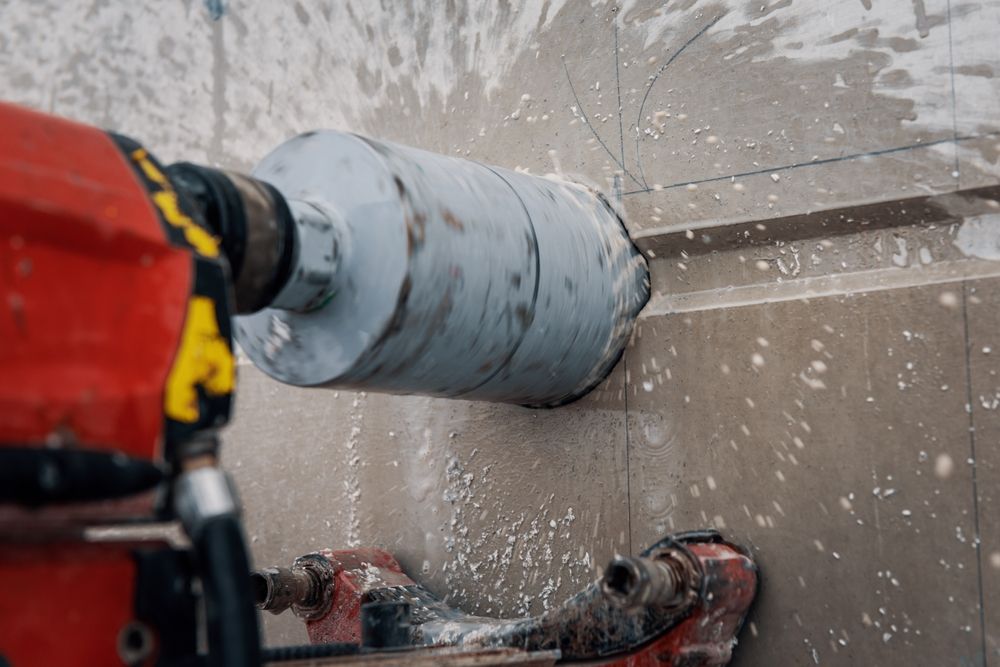
Core drilling is a specialized cutting method that uses a rotating, diamond-tipped bit to remove a cylindrical section of concrete, leaving behind a smooth, precisely sized hole. Unlike jackhammering or saw cutting, core drilling produces minimal vibration and dust, which makes it the preferred method for penetrations near sensitive utilities, finished interiors, or occupied buildings. In Corpus Christi, where many commercial properties sit close to coastal soil conditions and reinforced slabs, core drilling gives contractors a controlled way to cut through concrete without compromising the integrity of the surrounding material.
Core drilling is typically measured by bit diameter, ranging from small one-inch holes for plumbing vents to large-diameter holes exceeding twenty inches for HVAC ducting or utility sleeves. Every core drilling job starts with an assessment of the slab thickness, rebar density, and hole placement to determine the right bit size and drilling method for the application.
How Electric and Hydraulic Core Drilling Differ
D & C Concrete Cutting operates both electric and hydraulic core drilling rigs, and choosing between them depends on the job site conditions, hole size, and available power source in Corpus Christi.
Electric
Hydraulic
Electric core drilling equipment runs on standard power sources and is well suited for smaller diameter holes, interior applications, and locations where hydraulic power units aren't practical. Electric core drilling rigs are quieter and easier to maneuver in tight spaces, making them a common choice for residential and light commercial work across Corpus Christi.
Electric Core Drilling
Hydraulic core drilling delivers significantly more torque and consistent cutting speed, which makes it the preferred method for large-diameter holes, thick reinforced slabs, and high-volume commercial or industrial core drilling projects. Hydraulic rigs handle continuous drilling for extended periods without overheating, which matters on larger Corpus Christi job sites where multiple penetrations are required in a single day.
Hydraulic Core Drilling
Both electric and hydraulic core drilling methods produce the same clean, precise result. The decision comes down to slab thickness, hole diameter, and site accessibility, all of which our team evaluates before starting any core drilling job in Corpus Christi.
Common Applications for Core Drilling in Corpus Christi
Core drilling supports a wide range of construction and renovation work across residential, commercial, and industrial properties in Corpus Christi.
Plumbing & Utility Penetrations
Core drilling creates clean openings for water lines, drain pipes, and gas lines passing through concrete slabs, foundations, and walls.
Electrical & Data Conduit Runs
Electrical contractors depend on core drilling to route conduit and cabling through concrete without disturbing surrounding structural elements.
HVAC Ductwork Installation
Larger diameter core drilling is often required for HVAC ductwork penetrations through exterior walls and roof decks.
Structural & Soil Testing
Core drilling is also used to extract concrete samples for compressive strength testing, a common requirement on Corpus Christi commercial and municipal projects.
Get a core drilling quote for your Corpus Christi project by contacting D & C Concrete Cutting.
Our Core Drilling Process
Every core drilling project starts with a site evaluation to locate rebar, post-tension cables, and existing utilities before any cutting begins. Our team uses ground-penetrating radar or scanning equipment when needed to confirm hole placement is safe and accurate. Once the location is cleared, we select the appropriate electric or hydraulic core drilling rig based on the slab thickness and hole diameter required.
During the core drilling process, water-cooled bits keep temperatures controlled and reduce dust, which is especially important for indoor core drilling in occupied Corpus Christi buildings. After the hole is cut, the concrete core is removed intact, and edges are inspected to confirm a clean, properly sized penetration. Debris and slurry are cleared from the work area before the crew leaves the site.
Safety Standards and Precision in Concrete Core Drilling
Core drilling near structural reinforcement requires careful planning, since cutting through rebar in the wrong location can weaken a slab or wall. Our crews follow scanning procedures before every core drilling job to identify embedded steel and utility lines, reducing the risk of costly damage. Water management during core drilling is also carefully controlled to prevent slurry runoff, which matters for Corpus Christi sites near drainage systems or environmentally sensitive areas.
Precision matters in core drilling because an off-center or incorrectly sized hole can create rework, delays, and added cost. Our approach to core drilling in Corpus Christi is built around accurate layout, the right equipment for the job, and clean execution from start to finish.
Request a core drilling consultation with D & C Concrete Cutting
for your Corpus Christi property.
Frequently Asked Questions About Core Drilling
What is core drilling used for?
Core drilling is used to cut precise, round holes through concrete, masonry, or block for plumbing, electrical conduit, HVAC ducting, structural testing, and utility penetrations.
What is the difference between electric and hydraulic core drilling?
Electric core drilling is typically used for smaller holes and interior work, while hydraulic core drilling provides more torque and is better suited for large-diameter holes and thick reinforced concrete.
How thick a slab can core drilling cut through?
Core drilling can cut through slabs ranging from a few inches to several feet thick, depending on the bit diameter and whether electric or hydraulic equipment is used.
Is core drilling noisy or disruptive?
Core drilling produces significantly less noise and vibration than jackhammering or breaking concrete, making it suitable for occupied buildings and indoor environments.
Does core drilling create a lot of dust?
Most core drilling is performed with water-cooled bits, which control dust and keep the cutting surface at a safe temperature.
Can core drilling cut through rebar?
Diamond core drilling bits can cut through light to moderate rebar, but a site scan is always performed first to plan hole placement and avoid unnecessary reinforcement cutting.
How long does a core drilling job take?
Timing depends on hole diameter, slab thickness, and the number of penetrations needed, but most standard core drilling jobs are completed within a single day.
What sizes of holes can core drilling create?
Core drilling holes typically range from one inch in diameter for small plumbing vents up to twenty inches or more for large HVAC or utility penetrations.
Is core drilling safe for indoor use?
Yes, core drilling is one of the most common indoor cutting methods because it produces minimal dust, low vibration, and a controlled, precise result.
Do I need a permit for core drilling in Corpus Christi?
Permit requirements depend on the scope of the project and whether the core drilling affects structural elements or utility lines, so it's best to confirm with local building authorities before work begins.
Can core drilling be used on exterior walls and roofs?
Yes, core drilling is commonly used for exterior wall penetrations and roof deck openings for HVAC ductwork, vents, and utility lines.